
- About Us
- |
- Products
- |
- Contact Us
- |
-
- English
- |
- Inquiry List
- |
- Sign In or Sign Up
Plastic Sealing Interfaces: How End Caps Ensure Leak-Free Filtration
In liquid and air filtration systems, leak prevention is not optional—it is fundamental. Even the most advanced filter media with precise micron ratings cannot deliver reliable performance if the sealing interface fails. Among all sealing components in a filter cartridge, plastic end caps serve as the primary barrier against bypass leakage.
From capsule filters used in pharmaceutical processing to standard pleated cartridges installed in industrial housings, plastic end caps define structural integrity, sealing performance, and long-term durability. This article explores how plastic sealing interfaces work, why end caps are critical to leak-free filtration, and what engineering principles ensure reliable results.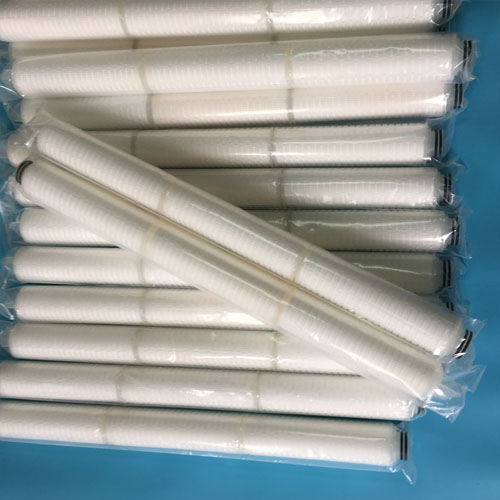
1. Understanding the Plastic Sealing Interface
A plastic sealing interface refers to the mechanical and material contact zone between the filter cartridge and its housing or between the filter media and structural components. The end cap acts as:
If the sealing interface is poorly designed, fluid can bypass the filter media entirely, rendering the filtration system ineffective.
Leak-free filtration depends on three elements:
The end cap is where all three converge.
2. The Role of End Caps in Standard Pleated Filter Cartridges
In standard pleated filter cartridges, plastic end caps are injection-molded components attached to both ends of the pleated media pack. They perform multiple functions simultaneously.
2.1 Sealing the Pleated Media
The end cap seals the open ends of the pleated media to prevent bypass. During manufacturing, thermal bonding, potting, or infrared welding fuses the media edges directly to the end cap.
A continuous, gap-free bond ensures:
If even microscopic gaps exist, high-pressure systems can force fluid through these weak points.
2.2 Housing Interface Sealing
Most industrial cartridges use standardized sealing configurations such as:
O-rings installed on plastic end caps create compression-based seals inside housings. The end cap geometry determines how evenly the O-ring compresses.
Uniform compression ensures:
Precision molding tolerances are critical—typically within ±0.1 mm—to guarantee consistent sealing performance.
3. End Caps in Capsule Filters
Capsule filters are fully enclosed units where the end cap is integrated into the housing structure. Instead of connecting to a reusable housing, the capsule itself forms a sealed environment.
In this case, the plastic sealing interface must:
Because capsule filters are often used in pharmaceutical and biotech applications, leak integrity requirements are extremely strict.
Common materials include:
The material must resist cracking, chemical attack, and thermal cycling.
4. Injection Molding Precision: The Foundation of Leak Prevention
Plastic end caps are manufactured through injection molding. Mold quality directly determines sealing reliability.
Key molding factors include:
Poorly controlled shrinkage can cause warping or dimensional deviation, leading to uneven sealing pressure.
High-quality molds ensure:
A smooth surface finish prevents micro-leak paths and ensures optimal O-ring seating.
5. Welding and Bonding Technologies
The bond between filter media and end cap is one of the most critical sealing interfaces.
Common bonding methods include:
5.1 Thermal Bonding
Heat softens both the media edge and plastic end cap, allowing molecular fusion.
5.2 Ultrasonic Welding
High-frequency vibration generates localized heat to create strong bonds. Suitable for thermoplastic materials.
5.3 Infrared Welding
Infrared heating melts the bonding surfaces without direct contact. This method provides:
Infrared systems are especially effective for polypropylene components because they reduce contamination and ensure clean, consistent weld seams.
Proper welding prevents:
6. O-Ring and Gasket Sealing Design
Many end caps rely on elastomeric O-rings for final sealing inside the housing.
6.1 Groove Design
The groove must allow:
Incorrect groove depth can cause under-compression (leading to leaks) or over-compression (leading to O-ring damage).
6.2 Material Compatibility
End cap plastic and O-ring elastomer must be chemically compatible with the fluid being filtered. For example:
The plastic surface must also resist wear caused by repeated installation cycles.
7. Pressure Resistance and Mechanical Integrity
Filtration systems may operate under:
Plastic end caps must withstand axial compression and radial pressure forces without cracking.
Structural reinforcement features include:
Finite element analysis (FEA) is often used during design to optimize strength without excessive material use.
8. Thermal Expansion and Environmental Factors
Plastic expands and contracts with temperature changes. In high-temperature or steam-sterilized environments, end caps must maintain dimensional stability.
Engineering considerations include:
Material selection plays a decisive role. Glass-filled polypropylene may be used where additional stiffness is required.
9. Leak Testing and Quality Assurance
To ensure leak-free filtration, manufacturers perform various tests:
Dimensional inspection verifies:
Consistent quality control prevents field failures and protects system integrity.
10. Common Failure Modes of End Cap Sealing
Understanding potential failures helps improve design.
10.1 Incomplete Media Bonding
Caused by insufficient welding temperature or uneven heating.
10.2 O-Ring Damage
Improper installation or excessive compression can damage elastomers.
10.3 Plastic Cracking
Chemical incompatibility or mechanical stress can cause micro-cracks.
10.4 Warped End Caps
Molding defects or cooling inconsistencies may lead to distortion.
Each failure mode emphasizes the importance of precise engineering and controlled manufacturing processes.
11. Customization and Advanced Sealing Solutions
Some applications require enhanced sealing features:
Custom end caps may also include traceability marks or embedded RFID chips for advanced filtration management systems.
As filtration standards become stricter, sealing interface design becomes a key competitive advantage.
12. Future Trends in Plastic Sealing Interfaces
The evolution of plastic sealing interfaces focuses on:
Automation and precision molding technologies are further enhancing repeatability and reliability in end cap production.
Conclusion
Plastic end caps are far more than simple closures—they are critical sealing interfaces that ensure leak-free filtration in both capsule and standard filter cartridges.
From injection molding precision and welding technology to O-ring groove design and material compatibility, every engineering detail influences system integrity. A properly designed end cap prevents bypass leakage, supports mechanical stability, and guarantees consistent filtration performance under demanding operating conditions.
In modern filtration systems, reliability begins at the sealing interface. By investing in high-quality plastic end cap design and manufacturing, filtration manufacturers can ensure that every drop of fluid flows exactly where it should—through the filter media and nowhere else.
